THEMATIC GROUPS
- Details
- Parent Category: THEMATIC GROUPS
- Category: Planning/Conflict
After about ten years of activities, the AESOP Planning/Conflict thematic group launches a
call for applications to become involved in the TG’s coordination.
Envisioned is the establishment of a coordination committee in charge of the TG and of its activities,
composed of:
- one co-coordinator, particularly in charge of relations with AESOP,
- two co-coordinators, particularly in charge tasks such as internal communication (TG website and relations with members) and external communication (relations with academic partners and contributors).
In taking over coordination of the TG, the first tasks of the new coordination committee would be:
- to adopt a basic TG charter of self-governing rules (e.g. internal tasks and responsibilities, tenures etc.) of the coordination committee members,
- to appoint a scientific advisory committee to support the TG’s activities,
- to improve communication with TG members and their involvement,
- to discuss and adopt a strategy and program of activities for the coming years.
For choosing the new coordination committee members, a two-steps procedure is proposed:
1. application: please express your interest before May 15, 2026 providing a brief statement of your motivation and of your ideas for contributing to the TG’s activities, using the following link:
https://forms.gle/iMSgxbQzVh5N25xs8
2. voting: upon publication of applications, a link for voting in anonymized form will be provided open to all through the AESOP TG website and the AESOP newsletter.
For an overview of the AESOP Planning/Conflict thematic group and its past activities, please see the dedicated website:
https://aesop-planning.eu/thematic-groups/planning-conflict
The general rules for AESOP TGs can be found here:
Thanks for your interest!

- Details
- Parent Category: THEMATIC GROUPS
- Category: Planning and Complexity

CALL FOR PAPERS
Complexity Unpacked: Analytical Tools & Practical Insights for Uncertain Futures
24th Conference of the AESOP Thematic Group on Planning and Complexity
Location: University of Nicosia, Department of Architecture, Cyprus
Date: 8–9 January 2027
[ Download Call for Papers as PDF ]
Planning operates within, and as part of, complex socio-spatial systems. Cities and regions are not merely objects of intervention but evolving, relational, and adaptive assemblages shaped by multiple interacting actors, institutions, infrastructures, and environments. They are characterised by non-linearity, emergence, uncertainty, path dependence, and cross-scalar interdependencies.
Complexity thinking has offered planning theory powerful shifts: from prediction to adaptation, from control to learning, from linear causality to feedback and co-evolution, and from optimisation to resilience and robustness. Yet an ongoing challenge remains: how can the conceptual advances of complexity thinking be meaningfully translated into planning practices, analytical tools, and institutional routines?
We invite contributions that explore this translation. Rather than treating complexity as metaphor alone, we seek work that operationalises (applies) complexity — that mobilises methods and tools capable of engaging with uncertainty, interdependence, and dynamic change in planning contexts. We welcome contributions that critically reflect on how complexity-informed tools reshape professional roles, decision-making cultures, and planning epistemologies. The theme positions tools not as neutral technical devices, but as socio-technical instruments embedded in institutional, political, and normative contexts. We encourage submissions that interrogate both the promise and the constraints of complexity-based approaches in real-world planning settings.
By unpacking both theoretical foundations and practical applications, the conference seeks to advance dialogue across scholars and practitioners committed to engaging complexity not only as a conceptual lens, but as a mode of planning action.
Scope & Topics
The conference invites contributions that explore the reciprocal relationship between complexity theory, analytical tools, and planning practice. We welcome work that moves across conceptual, methodological, and empirical domains, recognising (the co-evolution of theory and practice) that theory and practice co-evolve. We are particularly interested in how analytical approaches such as agent-based modelling, network analysis, system dynamics, exploratory scenario planning, resilience assessment, serious games, participatory methods, and hybrid qualitative–quantitative methods:
- Make visible feedback loops, emergent dynamics, and relational structures
- Support reflexive and adaptive governance
- Enable experimentation and learning in planning processes
- Facilitate participation and co-production under conditions of uncertainty
- Reveal limits, blind spots, and ethical implications of modelling complex systems
Submissions may engage with, but are not limited to, the following interconnected strands:
1. Conceptualising Complexity in Planning
Contributions that advance, reinterpret, or critically reflect on core complexity concepts and their relevance for planning, including:
- Emergence, self-organisation, and non-linearity
- Co-evolution, path dependence, and feedback dynamics
- Adaptation, resilience, robustness, and transformability
- Uncertainty, indeterminacy, and limits of prediction
- Relational, assemblage, and socio-technical perspectives on urban systems
We particularly encourage submissions that make explicit how these conceptual developments inform methodological choices or planning interventions.
2. Operationalising Complexity: Methods and Analytical Tools
Contributions demonstrating how complexity thinking is translated into concrete methods, including:
- Agent-Based Modelling (ABM)
- Network analysis of spatial, social, or infrastructural systems
- System dynamics and causal loop modelling
- Scenario planning and exploratory futures approaches
- Resilience metrics and adaptive capacity assessment
- Gamification, serious games, and simulation platforms
- Participatory modelling and co-production tools
- Hybrid qualitative–quantitative and mixed-method approaches
Submissions may focus on methodological innovation, technical development, or comparative application across contexts and scales.
3. Complexity in Practice: Governance, Institutions, and Learning
Contributions examining how complexity-informed approaches reshape planning practice, governance, and institutional cultures, including:
- Adaptive and reflexive governance arrangements
- Experimentation, learning, and iterative planning processes
- The role of modelling and simulation in decision-making
- Institutional uptake and resistance to complexity-based tools
- Ethical, political, and normative implications of operationalising complexity
- The evolving role of planners within complex adaptive systems
- A complexity take on the role, use and limitations of AI in planning
We welcome both empirical case studies and theoretically grounded reflections that illuminate the promises and constraints of complexity-informed planning.
Submission & Key Dates
Abstract Submission (max. 500 words): 15 June 2026
Notification of Acceptance: July 2026
Extended Abstract Submission (max. 2500 words): 15 October 2026
Conference Dates: 8–9 January 2027
Submission
Please submit abstracts to
Important: Include title, abstract, author names, affiliation, contact information and keywords.
Conference Format & Venue
The conference will include paper presentation sessions, method-focused panels, case study discussions and interactive and participatory formats aligned with complexity-based approaches.
It will be hosted by the Department of Architecture, University of Nicosia, Cyprus.
Contact
For inquiries regarding the theme, submissions, or participation, please contact:
Conference Organising Committee Member
Solon Solomou –
For updates, please also watch the thematic group's LinkedIn Group: https://www.linkedin.com/groups/12735445
The conference is organised within the AESOP Thematic Group on Planning and Complexity by Solon Solomou and the local organising team in Cyprus together with Christian Lamker and Jenni Partanen (thematic group coordinators). More information on the thematic group at https://aesop-planning.eu/thematic-groups/planning-and-complexity
Title image: AI-generated by ChatGPT

- Details
- Parent Category: THEMATIC GROUPS
- Category: Planning Education
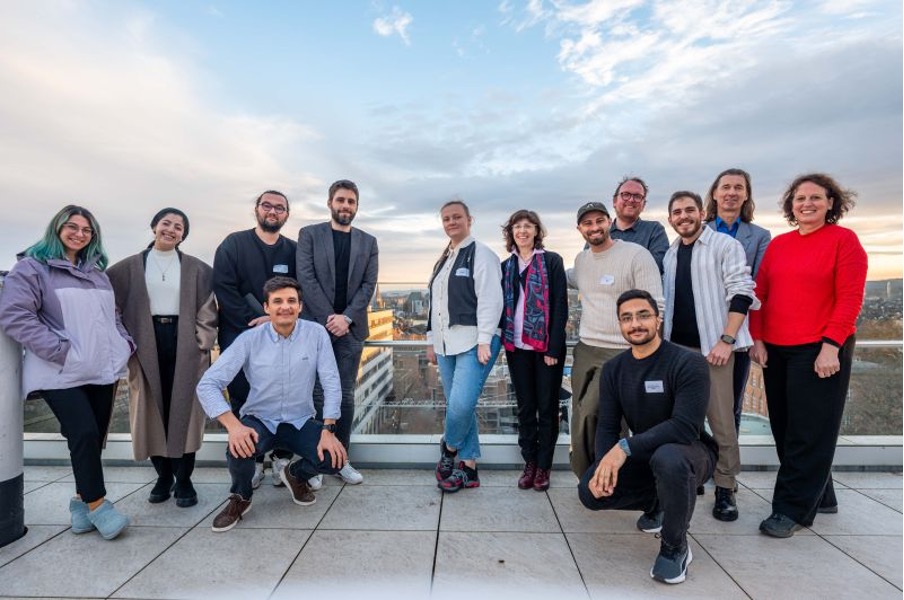
The workshop Planning Education in the Age of AI took place at RWTH Aachen University on 23 January 2026. The event was jointly organised by the AESOP Planning Education Thematic Group (Andrea Frank and Juliana Martins) and RWTH Aachen University (Fabio Bayro Kaiser).
The workshop featured thought-provoking presentations from practitioners, researchers and educators, alongside a dedicated space for in-depth discussion and collective reflection among participants. Drawing on contributions that explored AI use across practice, research, and education, the workshop contributed to ongoing debates on how planning education can engage with artificial intelligence both critically and effectively. In doing so, it highlighted the need to equip future planners with the skills to use AI thoughtfully, responsibly, and in ways that strengthen planning practice.
The programme included two keynote lectures:
- Rico Herzog(City Science Lab, HafenCity University Hamburg) opened the event with a presentation titled AI in practice: From algorithmic support to hyperreal planning?, exploring the growing role of AI in professional planning practice. (See the video here)
- Juliana Martins (Bartlett School of Planning, University College London) followed with Embracing, tolerating, or resisting AI? Reflections on the future of planning education, which addressed the strategic and pedagogical challenges AI poses for planning schools. (See the video here)
These keynote contributions were complemented by shorter “setting the stage” presentations, which helped frame the discussions by highlighting current experiences and challenges in planning education, practice and research:
- Tiernan FitzLarkin (Ulster University): “Planning education in the Age of AI – Challenges and Opportunities”. (See the video here)
- Marius Grootveld (RWTH Aachen University): “Culture Texture”. (See the video here)
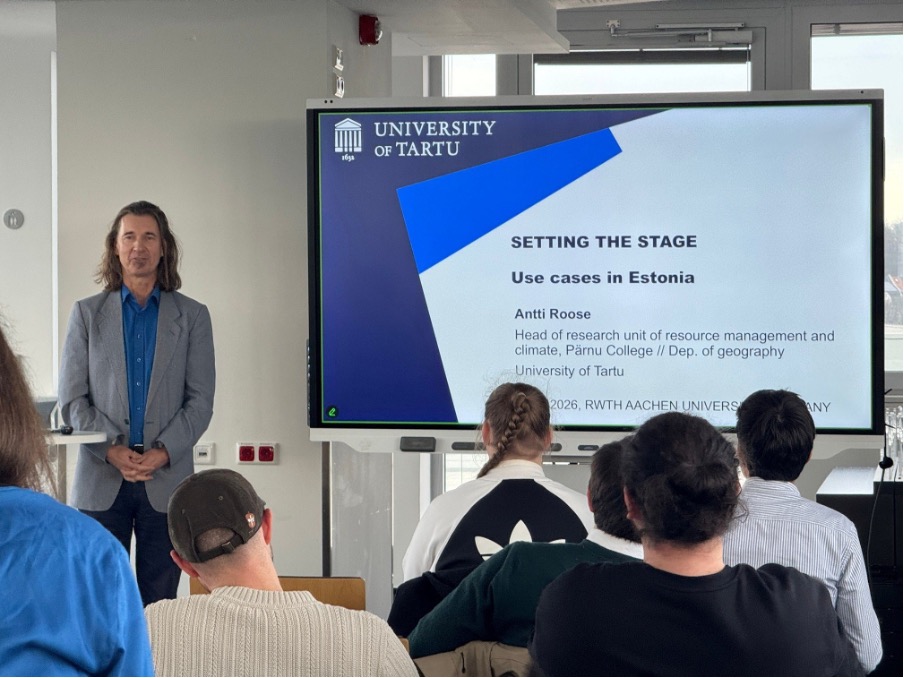
- Antti Roose (University of Tartu): “Setting the stage: Use cases in Estonia”. (See the video here)
- Caner Telli (RWTH Aachen University): “Live Data. Big Data. Smart Data? A brief excursion into live data planning and urban data platforms”. (See the video here)
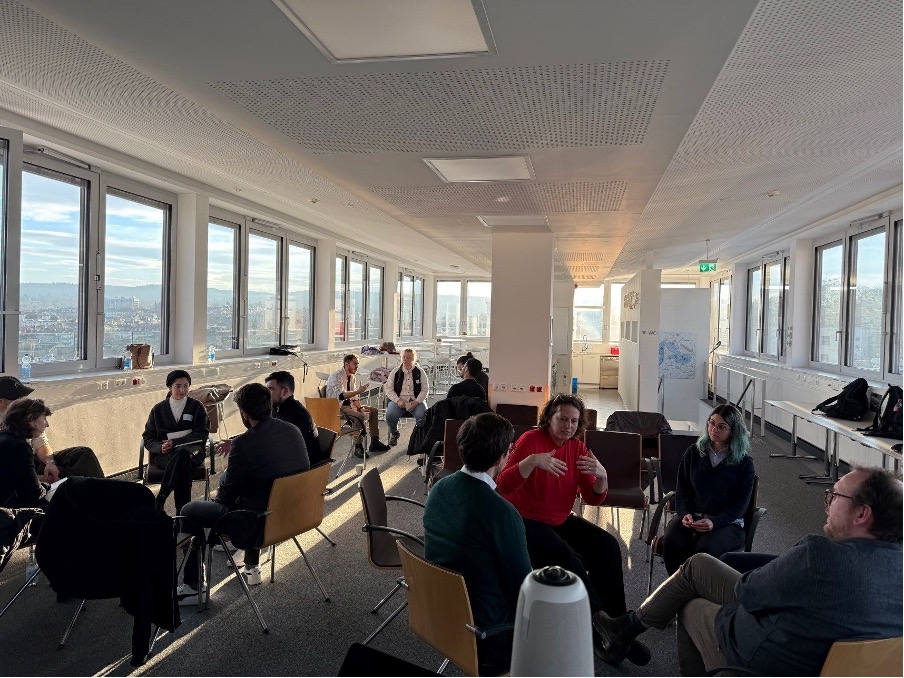
The interactive working sessions focused on two main themes:
- Challenges– Rethinking assessment: How can knowledge and skills be assessed fairly and meaningfully in a context where AI tools are widely accessible?
- Opportunities – Rethinking planning curricula with AI: How can AI support innovation in teaching and learning, and what new competences should planning education foster?
The workshop brought together around 20 attendees, enabling a focused and highly interactive exchange of ideas.
Key takeaways from participants:
Tiernan FitzLarkin:
- The approaches to AI in third-level education vary significantly, not only across countries and institutions, but also according to individual pedagogical perspectives.
- How we ultimately acknowledge or embed AI within planning education remains contested and is reflective of the ongoing debate within the wider sector.
- As planning becomes increasingly augmented, it remains critical to foreground specific dimensions (e.g., social, political, cultural) that distinguish planning professions from the existing AI technologies.
Antti Roose:
- There is a two‑tier and two‑mode pattern of adoption: on one hand, casual generative‑AI use in teaching, studies, and everyday academic management; on the other, specialised AI‑powered analytical and modelling tools. These operate in two modes - textual intelligence and visual intelligence.
- Both academic staff and students increasingly seek more systematic techniques, including structured prompt design and other methodological skills for using AI effectively.
- Critique of AI is shifting towards broader philosophical and ethical debates concerning teaching, learning and research. A clearer scoping (planning focus) of these issues is needed. Any ‘reality check’ should be grounded in recent practical cases within university courses and urban‑innovation projects where AI‑powered methods have already been tested.
Caner Telli notes that “AI must be understood and empowered as a tool, not as a savior or replacement. Those who rely on AI to think for them will find themselves obsolete when AI thinks without them”. He adds that:
- AI should be proactively integrated into planning education, particularly in analytical processes, to meet the growing volume and accessibility of data. However, for students to know what to prompt and how - which datasets are relevant, what results to expect, and how to apply them - they need a solid foundation in data analysis and data literacy. Therefore, it would make sense for me to begin planning education with manual, almost "primitive" mapping exercises in the early semesters, practising together how to read and interpret data. Once this understanding is established, AI can be introduced in later semesters to accelerate the process through well-crafted prompts.
- In concept development, I see significant potential in using AI as a sparring partner to test and refine ideas. However, students must be taught how AI systems actually work: they generate content based on probabilities and can produce erroneous or incoherent outputs. They do not „think"; they draw on existing training material and imitate it. Here too, providing the right prompts and curating the training material appropriately is essential.
- Crucially, planning remains rooted in people, so stakeholder engagement methods (interviews, surveys, participatory formats) should be taught as core skills. The insights gained from these processes are valuable parameters that, when properly evaluated, can be fed into AI systems (trained), supporting concept development and enabling a holistic perspective when sparring with one's own data and findings.
- Details
- Parent Category: THEMATIC GROUPS
- Category: Planning/Conflict
TU Berlin, 30 September / 2 October 2025
DFG reference GZ: GU 1042/6-1
The conference
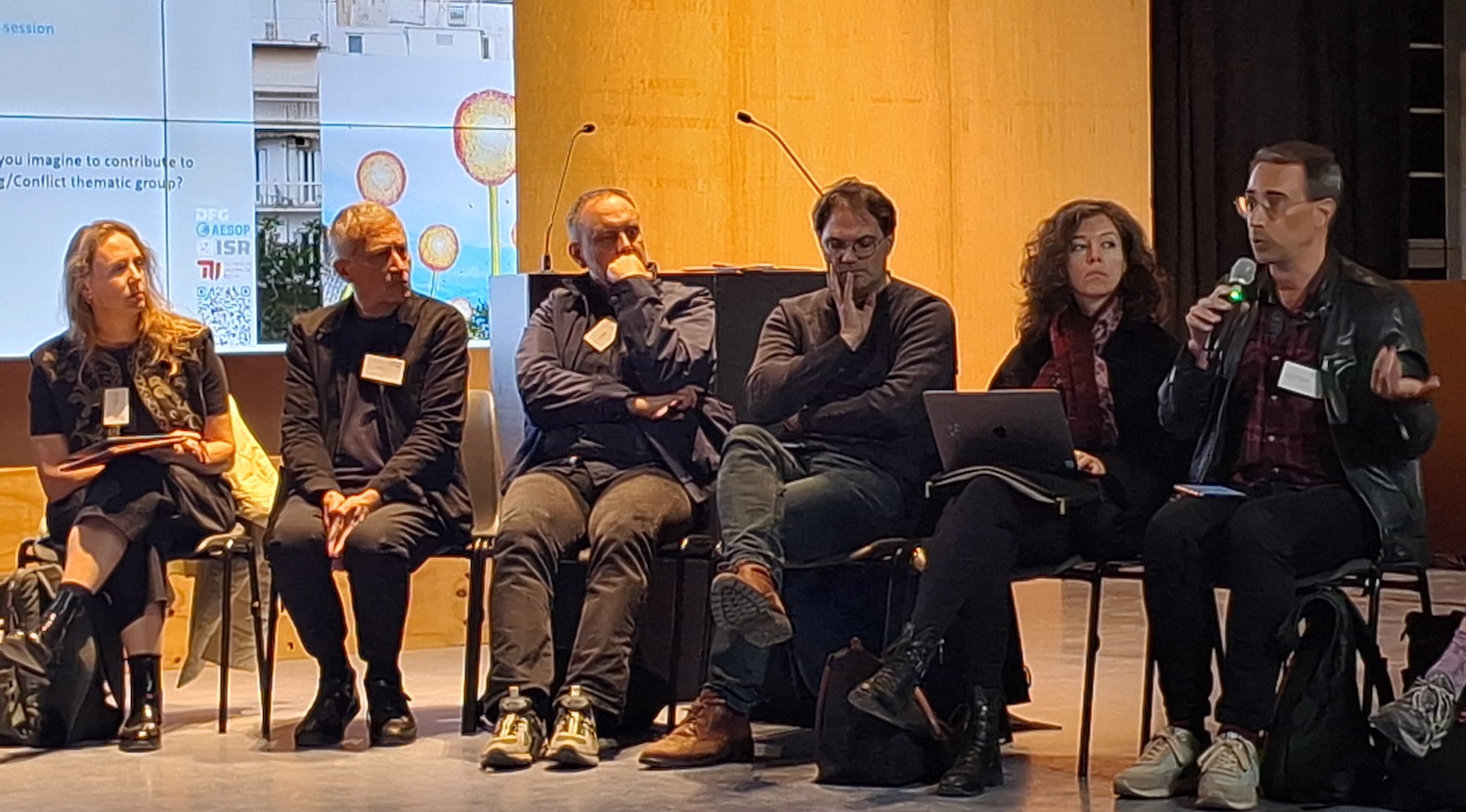
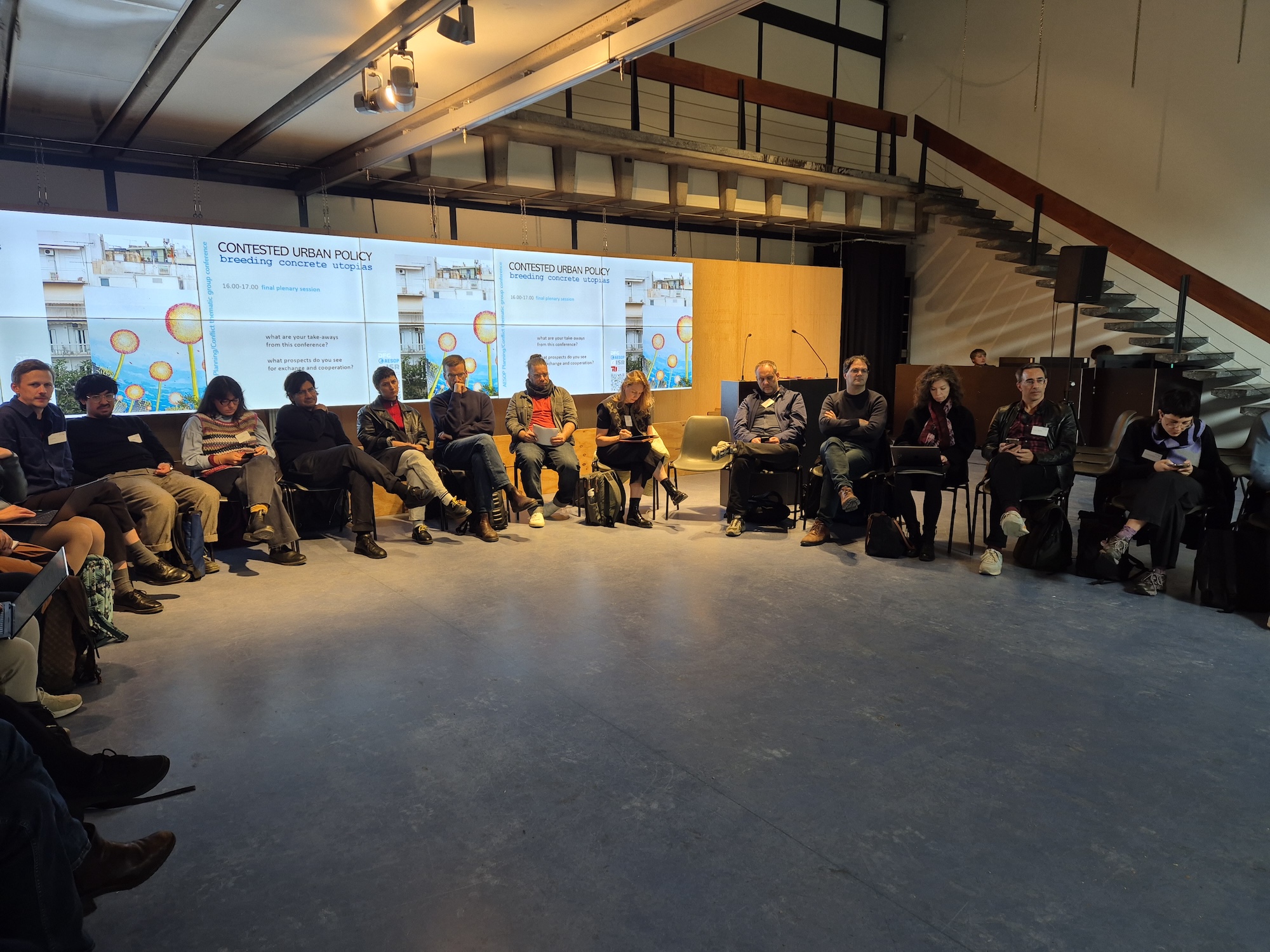
The AESOP Planning/Conflict thematic group conference titled Contested urban policy: breeding concrete utopias was held in Berlin between 30 September and 2 October 2025 at the Institute of Urban and Regional Planning, Building A. Information on the call and on the program is attached and is also available online at: https://www.tu.berlin/en/planningtheory/research-publications
The conference was initiated, conceived and organized at TU Berlin by Enrico Gualini and supported by a scientific committee composed of:
- Francesco Campagnari, EHESS Paris
- Enrico Gualini, Technische Universität Berlin
- Verena Lenna, Vrije Universiteit Brussels
- Alessandra Manganelli, Universitat de Barcelona
- Miguel A. Martinez, Uppsala Universitet
- Stijn Oosterlynk, Universiteit Antwerpen
- Carolina Pacchi, Politecnico di Milano
- Nanke Verloo, Universiteit van Amsterdam
The conference was based on an open call for papers widely publicized through academic and non-academic channels, resulting in 75 proposal submissions. Of these, 60 were accepted for inclusion in the program. Ultimately, the conference was attended by 65 registered participants, backed by a local team of four.
The conference program ultimately included 48 papers, organized in 8 parallel sessions, with members of the scientific committee serving as discussants/moderators. The program also included two keynote
speeches by Miguel A. Martinez (Uppsala Universitet) and Nanke Verloo (Universiteit van Amsterdam) as well as a final round table session with the participation of the members of the scientific committee.
Two post-conference activities were organized :
- on September 30, a field trip and visit to the cooperative development Haus der Statistik in Berlin-Mitte and panel discussion titled Contested urban policy: What spaces for concrete utopias? Critical reflections from the Berlin experience moderated by Enrico Gualini with the participation of Konrad Braun (ZKB eG, Haus der Statistik), Rebecca Wall (Urbane Praxis e.V.) and Enrico Schönberg (ZusammenStelle Rathausblock);
- on October 1, a field trip and visit to the community center ZK/U - Zentrum für Kunst und Urbanistik in Berlin-Moabit, moderated by Stefan Koderisch (ZK/U).
- Details
- Parent Category: THEMATIC GROUPS
- Category: Global South & East


AESOP IIT DELHI SOPP - UCL BSP WORKSHOP, 2026
for PhD candidates, Post-doctoral and Early-Career researchers
INTERNATIONAL PERSPECTIVES ON PLANNING INDUSTRIAL SPATIAL CONFIGURATIONS
Association of European Schools of Planning, Young Academics Network
Indian Institute of Technology Delhi, School of Public Policy
University College London, Bartlett School of Planning
Format: Online · No Registration Fee
Dates: 7-9 July 2026
AGENDA
IIT Delhi, UCL and the AESOP’s Global South & East thematic group, invite PhD candidates, postdoctoral researchers, and early-career researchers (within 7 years of PhD) to participate in a three-day online workshopdesigned to:
- Provide feedback on research in progress
- Offer mentoring by senior planning scholars
- Facilitate international dialogue across India, Europe and other regions
- Create opportunities to interact with journal editors from leading journals
- Build collaborative networks among emerging scholars working on industrial development and spatial planning
THEME
Industrial spatial configuration (such as corridors, clusters, zones etc.) and related spatial policies are increasingly central to development strategies worldwide. They reshape regional economies, reconfigure land and labour geographies, influence infrastructure investment, and raise critical questions about governance, equity, environmental change, and long-term sustainability. The trajectory of theories and concepts related to industrial spatial configurations, from Marshall’s idea of ‘industrial districts’ (19th century), to ‘growth centres’ (mid 20th century), to growth poles (1960s), to ‘corridors’ (mid 20th century onwards), SEZs (1970s onwards), ‘clusters’ (1990s), and ‘urban innovation hubs (or districts)’ (21st century), has been dominated by cases and policies of major industrial countries of the global north (with the notable exception of China’s SEZs).
Industrialization in the global south, using theories from the north, has had mixed results. Industrialization was often misinterpreted as a guarantor of modernization, development, growth, and prosperity. This view did not fully appreciate the role of infrastructure and institutions, in fostering and sustaining industrial development. In India many spatial configurations have been attempted, but most of these tried to recreate the configurations without closely examining whether the underlying assumptions were valid in the local context.
As India (along with other parts of the world) looks towards an era of ‘industrial corridors’, this is an opportune moment to revisit the question of what it takes to successfully industrialize within local political and socio-spatial contexts. The workshop welcomes papers that make conceptual, empirical and methodological contributions, by studying industrial spatial configurations and the contextual factors that are important to their development. The papers may respond to the following themes.
1. Spatial Planning and Territorial Strategy
- National, regional and inter-regional spatial strategies
- Integration of industrial priorities within spatial planning, and spatial regulatory tools
- Transformations in settlement patterns
2. Governance and Institutions
- Multi-level governance arrangements—across national, regional and local scales
- Institutional roles, mandates and coordination among various authorities and agencies
- Decision-making and stakeholder engagement
3. Environment and Equity
- Displacement and compensation, processes of land acquisition
- Rural-to-urban transformations, impacts on agriculture
- Ecological impacts of spatial transformations
- Approaches to environmental regulations
4. Labour Geographies
- Shifts in value-chain organisation across regions and globally
- Worker-centric location decisions
- Informal enterprises within formal industrial development
- Labour mobility, migration, skills formation and everyday working conditions
IMPORTANT DATES
Deadline for submission of abstracts: 6 April, 2026
Acceptance notifications: 4 May, 2026
Event held online: 7-9 July 2026
ELIGIBILITY
Open to all PhD Candidates, Postdoctoral Researchers, and Early-Career Researchers (within 7 years of PhD), from across the world with suitable abstracts that fit to the theme. Selected participants will required to provide endorsement from a supervisor or employer.
ABSTRACT SUBMISSION
Send your submission to the organising team in the MS Teams form at this link).
Individual Details and Abstract Submission – Fill out form
For any queries, please email:
Click here: AESOP_IITD-UCL_Workshop_CfA_-_January2026.pdf